
$31.07 Chewy Price
$39.99 List Price
Autoship Price

$15.97 Chewy Price
$24.99 List Price
Autoship Price
$20.00 Chewy Price
$29.99 List Price
Autoship Price

$34.22 Chewy Price
$46.99 List Price
Autoship Price
$99.99 Chewy Price
$149.99 List Price
Autoship Price
$119.00 Chewy Price
Autoship Price
$79.99 Chewy Price
Autoship Price

$23.98 Chewy Price
$29.98 List Price
Autoship Price
$69.99 Chewy Price
Autoship Price
$139.99 Chewy Price
Autoship Price
$99.00 Chewy Price
$139.00 List Price
Autoship Price

$149.99 Chewy Price
$199.99 List Price
Autoship Price
$164.00 Chewy Price
$249.99 List Price
Autoship Price
$119.99 Chewy Price
$179.99 List Price
Autoship Price
$189.99 Chewy Price
$299.99 List Price
Autoship Price
Blue Jay Feeders
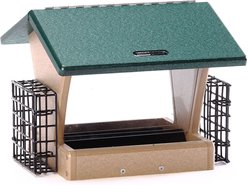
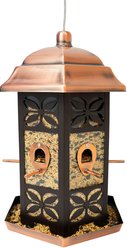
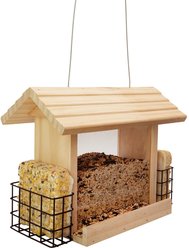
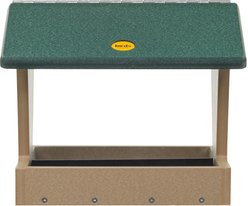
Attract beautiful jays to your yard by putting out blue jay feeders stocked with all their favorite foods. The best feeders for blue jays are sturdy platform feeders and trays stocked with jay mainstays like peanuts, sunflower seeds, and cracked corn. Hopper feeders also work well for jays, who can go through large volumes of food fairly quickly. Jays will also eat from tube peanut feeders, peanut wreaths, and suet cages. These larger birds require more surface area and strong perches to feel secure, so be sure to choose a larger feeder with lots of room for perching and feeding.
Chewy's selection of blue jay feeders includes stable platform and hopper styles that provide roomy feeding areas and hold the larger foods blue jays prefer to eat. Made with durable materials and stable hanging or pole-mounted designs, these jay feeders are made to handle repeat visits from all your favorite backyard birds. Here are some things to look for in a blue jay feeder:
-
Room to perch: Wide perches or open platforms help blue jays land and feed comfortably.
-
Sturdy, stable construction: Strong materials support heavier birds and frequent use without tipping or spilling.
-
Food compatibility: Blue jay feeder designs should suit larger foods like peanuts, cracked corn or big seed mixes for jays.
-
Stable mounting: Secure hanging or pole placement helps birds feel more confident about using the feeder.
-
Squirrel deterrent: Blue jay foods can also attract squirrels, so consider a feeder with a baffle or weight-activated platform to keep squirrels out.
The right blue jay feeder will help you attract these bold, intelligent birds while keeping other undesirable wildlife out. When the feeder matches their size and preferred foods, blue jays can feed more comfortably and will return more consistently. For best results, try putting out a few different types of feeders for your backyard blue jays, and set all their favorite foods to Autoship so you'll always have plenty on hand.
Frequently Asked Questions about Blue Jay Feeders
What type of feeder is best for blue jays?
The best type of feeder for blue jays is a platform or tray-style hopper feeder. Blue jays prefer to eat from a flat surface, so look for a feeder with an open tray design or a hopper style with a feeding platform. Feeders for blue jays should also be big enough to support their larger size and preference for larger foods like nuts, corn, and seeds with shells. Blue jays also enjoy peanut ring feeders, perfect for peanuts in or out of the shell, as well as suet cages with suet cakes in the winter.
Where should I place blue jay feeders?
Place blue jay feeders in an area near trees and shrubs where birds can fly to avoid predators. Many experts recommend mounting your blue jay feeder on a sturdy pole 5 to 7 feet off the ground in an area where there is a clear line of sight for safe approach. Position it out of direct sunlight and wind, if possible, and either far away or within 3 feet of windows to avoid collisions. Avoid putting your feeder too close to structures or branches where predators could pounce; 10 to 15 feet away is usually recommended.
Can blue jay feeders be used with peanuts?
Most blue jay feeders can be used with peanuts. Since peanuts are a favorite blue jay food, look for tray and hopper feeders large enough to accommodate shelled or unshelled peanuts. Or choose a peanut wreath or tube to keep your blue jays well-fed and happy.
Bird Type
Brand
6 Brands are shown below