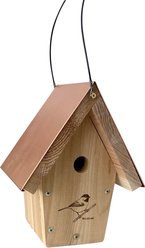
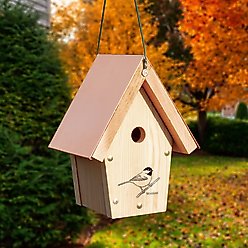
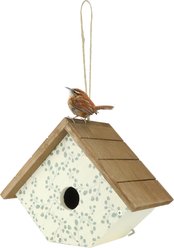
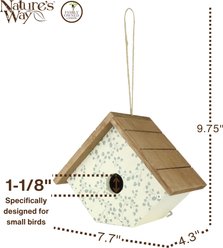

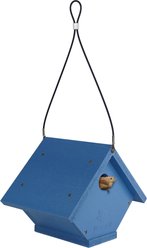
$20.01 Chewy Price
$22.99 List Price
Autoship Price
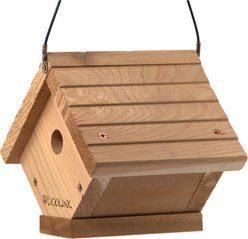
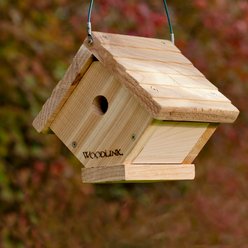
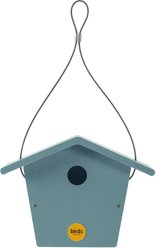
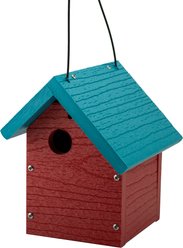
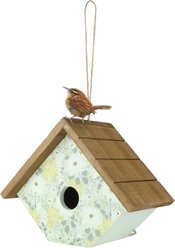
$14.99 Chewy Price
$18.24 List Price
Autoship Price
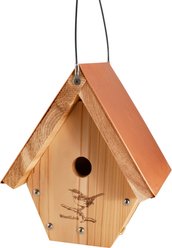
$21.78 Chewy Price
$31.95 List Price
Autoship Price
Wren Houses
Wren houses are designed to support the nesting habits of wrens, which are small cavity-nesting birds that look for sheltered, enclosed spaces to raise their young. Wrens prefer houses with simple construction, small entrance holes, and cozy interiors that provide protection from weather and predators. Because wrens are alert little birds, the right house design and placement can play a big role in whether they choose to nest.
Chewy's selection of wren houses includes compact wooden houses and styles that suit natural wren behavior. These houses are sized specifically for wrens, which helps discourage larger birds from taking over. And many wren houses are fully assembled and ready to hang. Here are some things to consider when shopping for bird houses for wrens:
-
Entrance hole: Small openings help attract wrens while keeping larger birds out.
-
Interior dimensions: Wrens prefer snug nesting spaces rather than spacious interiors.
-
Durable materials: Choose durable, weather-resistant materials like kiln-dried wood.
-
Clean-out access: Many wren houses feature removable panels for easy cleaning between nesting seasons.
Hang your wren house in a sheltered area near dense cover, 5 to 10 feet off the ground. With thoughtful placement and routine maintenance, a well-designed wren house can support repeated nesting seasons and give wild wrens a safe place to raise their young.
Frequently Asked Questions about Wren Houses
Do wrens use bird houses?
Wrens often use bird houses when the size and placement meets their needs. Wren houses are designed specifically for smaller birds with small entrance holes and limited interior space, creating a snug and cozy nesting area.
Where should wren houses be placed?
Wren houses should be placed several feet off the ground in quiet, low-traffic areas near trees or shrubs. Having cover nearby helps wrens feel more secure while nesting.
What size entrance hole do wren houses need?
Wren houses need an entrance hole about the size of a quarter. Small entrance holes, ideally about 1 inch in diameter, allow wrens to easily access the house while keeping larger birds out.
Bird Type
Bird House Features
Product Type
Material
Brand
6 Brands are shown below