Puppy Dental Care 101: When To Start Brushing and More

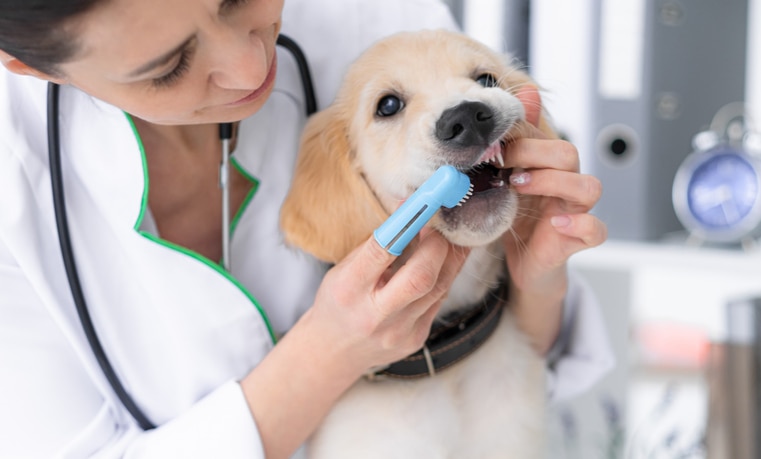
Photo by Zheka-Boss/iStock/Getty Images Plus
You’re used to brushing your own teeth, but keeping your dog’s teeth clean is just as important.
Puppy dental care supports not only your dog’s oral hygiene—but also their overall health and well-being.
Here’s everything you should know about puppy teeth cleaning and signs of dental issues.
Key Takeaways
- Start brushing your puppy’s teeth as early as 8–12 weeks old so they can get comfortable with the routine from a young age.
- Beginning dental care early helps puppies learn that toothbrushing is a positive part of their daily routine.
- Daily brushing helps remove plaque before it hardens into tartar, which could lead to painful dental problems later on.
- Regular dental care and vet checkups can help catch serious dental issues like gingivitis.
- Dental chews and balanced nutrition can also play an important part in your dog’s overall health.
What Is Puppy Dental Care?
Puppy dental care, including at-home brushing and professional cleanings at your veterinarian’s office, is necessary to maintain good oral hygiene and reduce plaque buildup on your puppy’s teeth.
Starting dental care early on also reduces the risk of dental disease and establishes a healthy routine that can continue into adulthood.
What Are the Benefits of Puppy Dental Care?
The benefits of puppy dental care go beyond your puppy having fresh breath.
Here are a few reasons you should practice regular dental care:
- Brushing reduces plaque buildup. This lowers the risk for heart, liver, and kidney diseases. That’s because dental care prevents bacteria from entering the bloodstream, which can cause inflammation in these organs.
- It limits plaque. When teeth are regularly cleaned, plaque is brushed off before it can harden into tartar. This reduces the risk for gum inflammation (gingivitis) and dental disease, which can cause pain and tooth loss.
- It helps prevent future issues. Regular dental exams help ensure your puppy’s teeth are coming in properly. Identifying retained puppy teeth allows a veterinarian to promptly remove them to prevent overcrowding and misaligned adult teeth.
When Should You Start Puppy Dental Care?
Starting dental care when your dog is young helps them become comfortable with regular brushing.
Get your puppy used to brushing as early as 8–12 weeks old. At this age, their adult teeth haven’t come in, but you can use a brush to gently clean their gums and start getting them used to daily cleaning.
What To Do Before You Start Regular Brushing
Set up a positive experience for your puppy so they associate brushing with good things—and don’t have a negative experience.
Before you start brushing your puppy’s teeth:
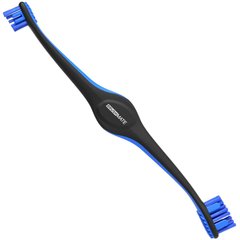
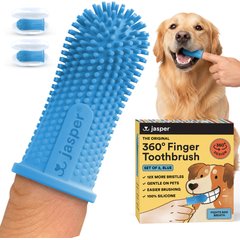
- Pick the toothbrush you’ll use for your pup. You can choose a more classic toothbrush or a finger toothbrush.
Recommended Products
2. Next, pick a toothpaste. Toothpaste comes in a variety of flavors, from poultry to mint, so choose what your pup likes best.
Recommended Products


3. Introduce the toothbrush and toothpaste a few times in a positive setting to get them familiar with the process.
4. Offer them a small lick of the toothpaste to make sure they like the flavor. If they don’t, choose a different flavor.
5. Show them the toothbrush and offer them a treat to form a positive association with brushing.
Recommended Products


How To Brush Your Puppy’s Teeth
Brushing your puppy’s teeth should only take one or two minutes.
However, the first few times might be much shorter because your puppy needs to get used to the brushing.
Here’s how to brush your puppy’s teeth at home:
- Put a blueberry-sized amount of toothpaste onto the toothbrush.
- Gently lift your puppy’s top lip using the toothbrush or your finger. If you find it difficult to keep the toothbrush in your puppy’s mouth, it may be helpful to have someone hold your puppy while you’re brushing.
- Brush all surfaces of the top teeth first, ensuring you reach the far back of the mouth where food and plaque may stick.
- Continue brushing the lower teeth, ensuring the surface of each tooth is cleaned.
- Rinse the brush under a faucet and remove all leftover toothpaste and saliva so bacteria can’t grow on the bristles.
How Often Should You Brush Your Puppy’s Teeth?
Regardless of your dog’s size or breed, try to brush your puppy’s teeth once a day to establish a long-lasting, positive routine and support good oral health.
Your pet’s first professional dental cleaning should occur somewhere between 1–3 years old, depending on your dog’s breed and your veterinarian’s recommendations.
Small breeds tend to need cleanings earlier than large-breed dogs because their mouths are smaller, leading to crowded teeth and more areas where bacteria and plaque can become trapped.
Other Ways To Support Your Puppy’s Dental Health
While tooth–brushing is essential for dental care, it’s not the only thing you can do. Here are some other helpful ways to keep plaque and tartar at bay.
Dental Chews
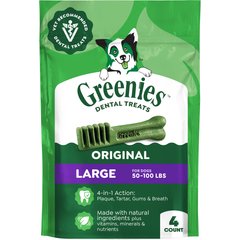
Giving your puppy a dental chew or treat once a day is a great complement to brushing. When a dog chews, plaque is scraped from the teeth before it can harden into tartar. You can begin giving your puppy dental chews around six months of age.
Try these vet-recommended products:
Recommended Products

Complete and Balanced Diet
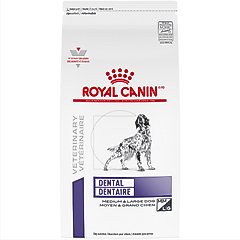
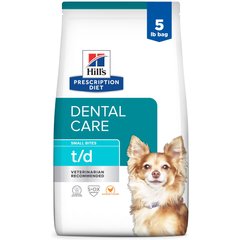
While all dry kibble helps to scrape plaque from teeth, specially formulated diets can give your puppy’s dental health an extra boost.
You can try these vet-recommended options:
Recommended Products
Clean Bowls and a Fountain
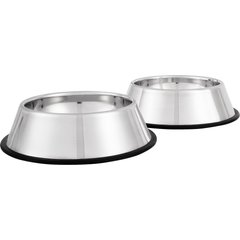
Bacteria can contribute to poor oral health, so cleaning your dog’s bowls with hot, soapy water each day helps prevent it from building up.
Recommended Product
A water fountain can also help prevent bacteria from growing in the water and will encourage your dog to hydrate.
Recommended Product

Routine Vet Visits
One of the most important parts of dental care is routine veterinary visits. Your vet can help identify dental problems early, such as tooth abscesses or tartar buildup, so they can be resolved promptly.
Signs of Dental Problems in Puppies and When To Call a Vet
You may notice the following signs if your puppy has a dental issue:
- Bad breath: If you smell a particularly bad, fishy odor from your puppy’s mouth, they may have tartar buildup and inflamed gums.
- Tartar buildup: If you see a thick yellow or brown coating on your dog’s teeth, especially near the gumline, it likely indicates tartar that requires a professional dental cleaning for removal.
- Excessive drooling: If your dog is drooling more than normal, mouth pain may be the reason.
- Dropping food or decreased appetite: Dogs who have painful teeth often drop food out of their mouths when eating. Some puppies will even avoid eating due to tooth pain and discomfort.
- Bleeding gums: If your puppy’s gums are red, swollen, or bleeding, this signifies a dental issue that should be addressed as soon as possible.
- Pawing at the mouth: If your puppy’s teeth or gums are bothering them, they may start to rub their mouth to relieve the discomfort.
- Chipped or broken teeth: Chipped teeth can cause significant pain or discomfort and increase the risk for mouth infections.
If you notice any of these signs, see your veterinarian as soon as possible.
If your puppy has swelling beneath their eye (which can indicate a tooth root abscess) or a fractured tooth with exposed pulp, take your dog to an emergency veterinarian right away.
FAQs About Puppy Dental Care
When should you start brushing your puppy’s teeth?
Begin dental care when your puppy is around 8–12 weeks old.
How much does dental cleaning for puppies cost?
Dental cleaning for puppies can range from $200 to $500 or more for a professional cleaning. At-home care may cost about $20 per month.
When can I start giving my puppy dental chews?
You can start giving your puppy dental chews around six months of age. Waiting until this age protects softer baby teeth from chipping and reduces the risk for stomach upset.
Can puppies get cavities?
Yes, puppies can get cavities, but they’re not common. If you think your puppy has a cavity, see a veterinarian as soon as possible, since cavities can be painful.
When do puppies first start teething?
Puppies start teething around 3–4 months old. Before this, you can use a finger brush to gently clean their gums.