


$16.98 Chewy Price
$21.99 List Price
Autoship Price


$21.62 Chewy Price
$32.99 List Price
Autoship Price
$68.47 Chewy Price
$71.47 List Price
Autoship Price
$60.97 Chewy Price
$64.97 List Price
Autoship Price
$95.99 Chewy Price
$109.99 List Price
Autoship Price
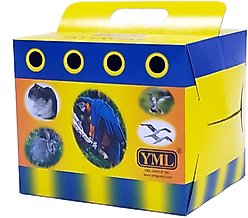
$54.65 Chewy Price
($0.55/ea) Price per Unit
$79.99 List Price
Autoship Price
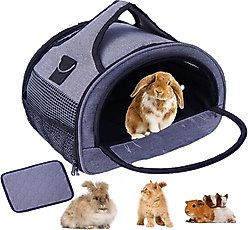
$71.70 Chewy Price
$74.35 List Price
Autoship Price
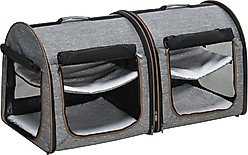
$209.99 Chewy Price
$219.99 List Price
Autoship Price
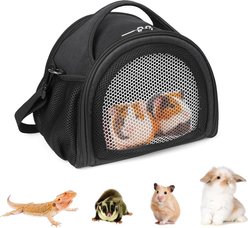
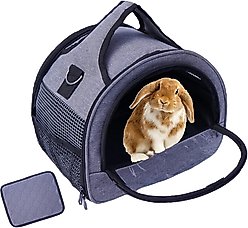
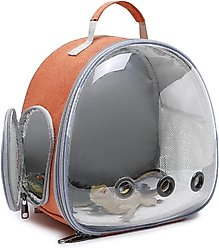
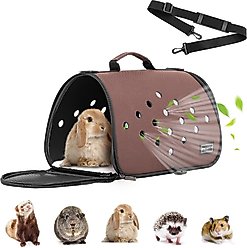
Out of Stock




Mouse Carriers
When it comes to transporting your pet mouse, safety is paramount. Whether you're bringing your new pet home for the first time or taking them to the vet, you need an appropriate carrier. Mouse carriers are secure and well-ventilated to ensure your pet's safety and well-being. They should also be easy to clean, comfortable for you to carry, and appropriately sized for your pet. Here are some factors to consider when shopping for mouse carriers:
- Size: Look for a carrier at least 6 inches long by 4 inches wide by 4 inches high but ideally larger
- Solid bottom: A solid base enables you to line the carrier with bedding to keep your mouse comfortable
- Escape-proof: Make sure there's a locking lid and that any gaps are no wider than ¼-inch
- Easy to clean: Hard materials like plastic are easier to clean than fabric
- Well-ventilated: Holes, slits, or bars ensure your mouse gets plenty of fresh air
Travel can be stressful for your mouse, but adding familiar touches to their carrier can help them feel a little more comfortable. It's a good idea to line the mouse carrier with something absorbent like a clean cloth or some bedding from the cage. Make sure your mouse also has somewhere to hide, a little food to snack on, and maybe a toy to play with in case they get bored.
Frequently Asked Questions about Mouse Carriers
How do you transport a pet mouse?
Always transport your mouse in an enclosed container that is well-ventilated and escape-proof. Mouse carriers are preferred, because they are designed specifically to keep your mouse safe and comfortable during their journey.
Are plastic or fabric carriers better for mice?
Hard plastic mouse carriers are better than fabric carriers for mice, because they are more stable, secure, and easier to clean. Mice can potentially chew through fabric carriers and escape.
What size carrier is suitable for a mouse?
A mouse carrier should be at least 6 inches long by 4 inches wide by 4 inches high, though many small animal carriers are bigger and are suitably sized for a mouse. The key is to ensure the carrier is escape-proof, so it should have a secure lid and no spaces wider than ¼-inch.
What do you put in a mouse carrier?
Put some bedding from your mouse's cage in the carrier along with a hideout, a small amount of food, and maybe a toy. Avoid placing a water bottle in the carrier to prevent leaks, but make stops to offer your mouse water during longer trips.
Material
Brand
5 Brands are shown below